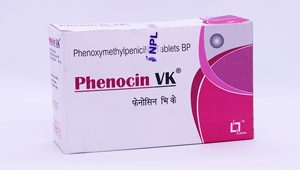
- Primary and secondary prevention of Rheumatic Fever
- Streptococcal infections (without bacteremia)
- Pneumococcal infections
- Staphylococcal infections – penicillin G sensitive
- Fusopirochetosis (Vincent gingivitis and pharyngitis)
- Upper Respiratory Tract Infections
- Streptococcal infections: 125 to 250 mg orally every 6 to 8 hours for 10 days.
- Pneumococcal infections: 250 to 500 mg orally every 6 to 8 hours until patient is afebrile for at least 2 days
- Primary prevention of Rheumatic fever (as per AHA guideline):
- Patients weighing 27 kg or less: 250 mg orally 2 or 3 times daily for 10 days
- Patients weighing more than 27 kg: 500 mg orally 2 or 3 times daily for 10 days
- Secondary prevention of Rheumatic fever (as per AHA guideline):
- Orally 250 mg twice daily
| TYPE |
Duration after last attack |
| Rheumatic fever with carditits and residual heart disease (persistent valvular disease) |
10 years or until age 40 years (whichever is longer); lifetime prophylaxis may be needed |
| Rheumatic fever with carditis but no residual heart disease (no valvular disease) |
10 years or until age 21 years (whichever is longer) years |
| Rheumatic fever without carditis |
5 years or until age 21 years (whichever is longer) |
Hypersensitivity reaction to penicillin
- Pregnancy category: Category B
- Renal impairment: Excretion is delayed by 3-4 times
- Pediatric patients: In neonates and young infants, excretion is considerably delayed.
- Prolonged use may result in super infection
Melanoglossia, Mild diarrhea, Nausea, oral Candidiasis, Vomiting
- Store it at or below 25°C in the original package to protect it from light and moisture.
- Keep the medicine out of the reach of children and pets.